
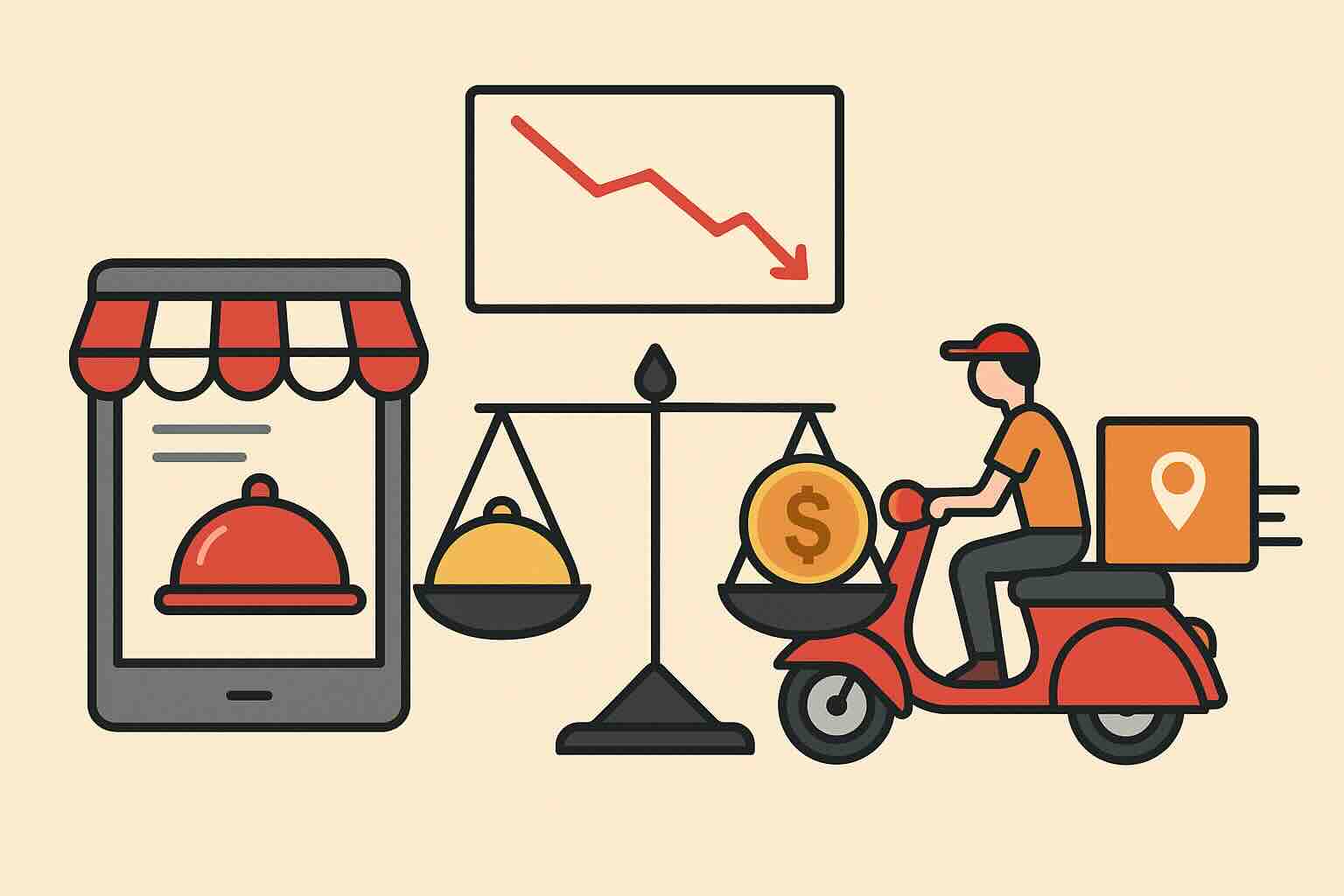
The Food Delivery Bubble: Why Restaurant Economics Are Collapsing—and How Yori Will Fix It
The cracks in India’s food delivery economy are no longer hairline fractures—they’re canyons. Restaurants, once promised “digital transformation” and “new demand,” are now barely surviving on razor-thin margins, while aggregators report record gross order values. The contradiction is glaring: platform profits rise on the back of partner losses.
It’s time to acknowledge a hard truth—the current aggregator model is broken.
The illusion of “growth”
India’s food delivery market looks massive on paper: big GMV and tens of millions of active users. But this growth hides a systemic imbalance. Many restaurants lose 25–30% per order in commissions, discounts, delivery costs, and ads. Add “visibility fees,” and a small outlet ends up paying more to stay visible than it earns from orders.
The obsession with GMV and take-rate optimization has turned partners into commodities. Restaurants are pushed into discount wars, forced to chase algorithmic rankings, and starved of direct relationships with customers. The result? Quiet closures across Tier-1 and Tier-2 cities.
The economics no one talks about
Even platforms’ own profitability is precarious. Logistics costs, rider incentives, and refunds erode margins. To maintain investor confidence, price increases for restaurants and customers are used to paper over operational fragility.
This system depends on constant capital inflows and artificial demand creation. As capital tightens, investors ask the right question: Where’s the real path to profitability? Under the current construct, there isn’t one that’s equitable for restaurants.
A lean alternative
Yori is being built for the next cycle of India’s consumer internet—a lean, multi-service platform that restores economic balance between platform, partners, and users.
- Partner ownership: Direct customer relationships via in-app loyalty and feedback; no lock-in.
- Transparent commissions: No “visibility” extortion or pay-to-play ranking.
- Shared infrastructure: Rides, food, grocery, and services run on unified logistics and payments, lowering per-order costs.
- Brand preservation: Outlets retain identity instead of becoming invisible behind an aggregator.
By merging logistics, payments, and customer interaction across verticals, Yori creates shared efficiency—compounding retention without subsidy burn.
The real opportunity
The next breakout won’t be a single-vertical app. It will be a profit-first ecosystem that fixes unit economics across categories. Investors increasingly value cash efficiency, path to profitability, retention, contribution margin, and LTV/CAC discipline. Yori’s model compounds demand across services, improves utilization of fleets, and boosts order density—driving better contribution margins.
Every order—whether food, grocery, or ride—should strengthen the same network, not fragment it.
Closing thoughts
Zomato and Swiggy changed how India eats, but their middleman economics are fraying. The next phase belongs to platforms that think beyond GMV headlines and toward true shared value creation.
Yori isn’t chasing scale for headlines. It’s chasing balance—for restaurants, riders, and customers.
The restaurant economy doesn’t need another aggregator. It needs a new architecture. That’s what we’re building.